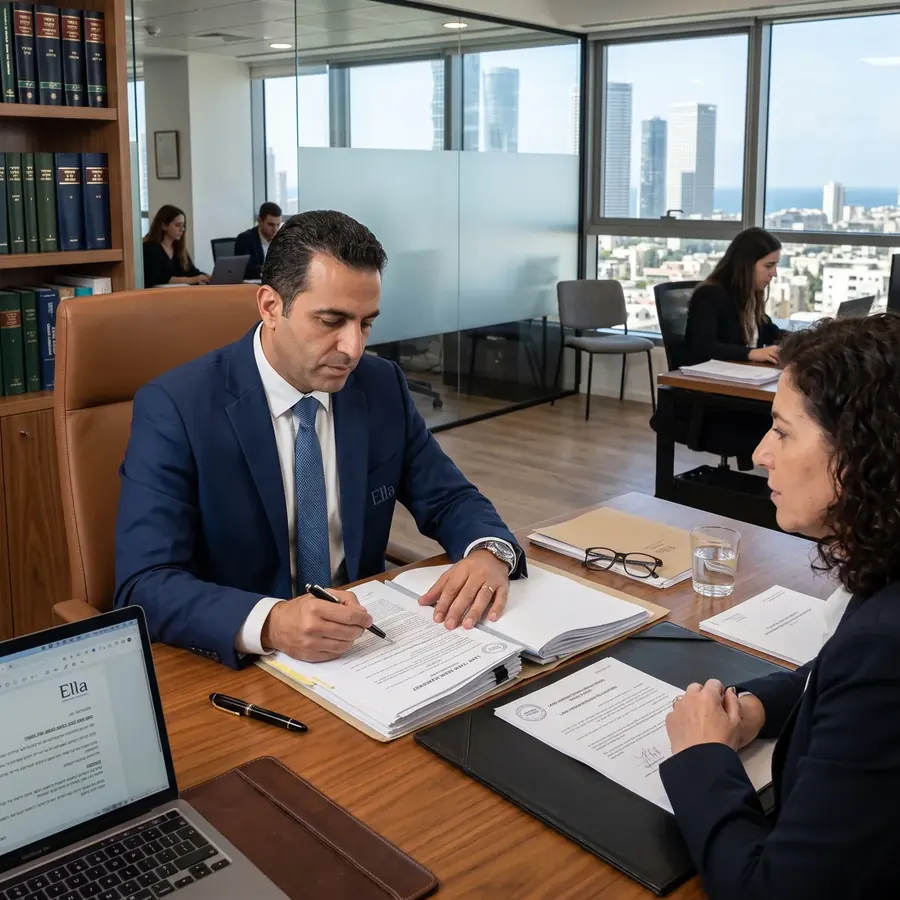





Safeguarding Your Investment: Comprehensive Urban Planning Due Diligence in Israel
Investing in Israeli real estate offers immense potential, yet it comes with a unique set of complexities, particularly concerning urban planning. For anyone considering a property transaction in Israel, whether an international investor or an Oleh Chadash, comprehensive urban planning due diligence (Tochnit / Vaada) is not merely a recommendation; it is an absolute necessity. The intricate framework of Israeli land law and development regulations, governed by planning schemes (Tochnit) and various committees (Vaada), can present significant challenges to the uninitiated. Our firm specializes in providing the meticulous legal oversight required to navigate these complexities, ensuring your investment is secure and your interests are robustly protected. We offer clarity, expertise, and peace of mind, transforming potential obstacles into opportunities for informed decision‑making in the dynamic Israeli real estate market.
Understanding the Pillars of Urban Planning in Israel: Tochnit and Vaada
The foundation of any real estate venture in Israel rests upon a thorough understanding of its urban planning landscape. This landscape is primarily shaped by two critical components: the "Tochnit" (planning schemes) and the "Vaada" (planning committees). Grasping their functions and interplay is paramount for making informed property decisions.
What is a Tochnit (Planning Scheme)?
A Tochnit (תוכנית), often translated as a planning scheme or master plan, is a statutory document that dictates land use and development within a specific geographical area in Israel. These plans are legally binding and form the backbone of all construction and development activities. They define everything from permissible building heights and densities to designated public spaces, infrastructure, and environmental restrictions. Tochnit are structured hierarchically:
- National Master Plans (TAMA – Tochnit Metarit Artzit): These are broad, strategic plans addressing national interests like transportation, coastal development, or population distribution. TAMA 35, for instance, sets guidelines for national land use and conservation.
- District Master Plans (Tochnit Mehozit): These plans elaborate on the national directives at a regional level, covering entire districts and providing more specific guidelines for urban and rural development within their jurisdiction.
- Local Master Plans (Tochnit Mekomit): Developed by local authorities, these plans provide detailed regulations for specific cities, towns, or neighborhoods. They define zoning (e.g., residential, commercial, industrial), building lines, open spaces, and more.
- Detailed Plans (Tochnit Mufarat): These are the most granular plans, often covering a single plot or a small cluster of plots. They specify precise building rights, architectural guidelines, and infrastructure requirements for individual projects.
Each level of Tochnit must conform to the plans above it. A thorough due diligence process involves meticulously reviewing all relevant Tochnit that apply to a specific property to understand its current and potential future uses.
The Role of the Vaada (Planning Committees)
The Vaada (ועדה), meaning committee, refers to the various planning and building committees responsible for approving, rejecting, and overseeing the implementation of Tochnit. These committees are the decision‑making bodies that translate planning schemes into tangible development. Key committees include:
- Local Planning and Building Committees (Vaada Mekomit Le’Tikhnun u’Bniya): These committees operate at the municipal level, handling local planning schemes, issuing building permits, and addressing objections from the public. They are the primary point of contact for most individual building applications in cities like Herzliya (46100) or Netanya.
- District Planning and Building Committees (Vaada Mehozit Le’Tikhnun u’Bniya): Overseeing several local committees, these bodies approve district plans, hear appeals against local committee decisions, and handle larger, more complex projects that cross municipal boundaries.
- National Planning and Building Council (Moetza Artzit Le’Tikhnun u’Bniya): This is the highest planning authority in Israel, responsible for national master plans and major infrastructure projects.
- Special Committees: There are also specialized committees, such as those dedicated to urban renewal projects (e.g., Vaadot le’Tichnun u’Binui le’Proyektei Hit’Hadshut Ironit), which manage the unique complexities of large‑scale regeneration efforts like TAMA 38 or Pinui Binui.
Understanding which Vaada has jurisdiction over a property and the specific procedures they follow is crucial for navigating the permit and approval processes effectively.
| Body | Level | Primary Function | Key Decisions |
|---|---|---|---|
| National Planning and Building Council | National | Strategic planning for national interests, major infrastructure. | Approval of National Master Plans (TAMA). |
| District Planning and Building Committees | District (Regional) | Oversee local plans, hear appeals, approve district plans and large projects. | Approval of District Master Plans, appeals from local committees. |
| Local Planning and Building Committees | Local (Municipal) | Detailed planning for cities/towns, issuing building permits. | Approval of Local/Detailed Plans, building permits, local objections. |
Contact Our Israeli Real Estate Law Experts Today
★★★★★ 4,9/5 · 127 client reviewsWhy Comprehensive Urban Planning Due Diligence is Non‑Negotiable
The decision to invest in real estate in Israel is significant, and without thorough urban planning due diligence, you expose yourself to substantial risks. This critical process goes beyond a simple property inspection; it delves deep into the legal and regulatory framework governing the land and its potential development.
Mitigating Risks and Unforeseen Challenges
A lack of proper due diligence can lead to the discovery of significant liabilities long after a purchase. This includes identifying unapproved construction, existing planning violations, or even future plans for expropriation for public use. Our meticulous review helps uncover these hidden issues, preventing costly delays, substantial fines, or even demolition orders that could severely impact your investment. Understanding the planning constraints from the outset can save you immense financial and emotional distress.
Ensuring Compliance and Legal Validity
Verifying that a property aligns with all current and future planning schemes is fundamental. Due diligence ensures that any existing structures are legally built and that any proposed renovations or expansions are permissible under the relevant Tochnit. This protection extends to safeguarding against potential claims from third parties or, critically, from planning authorities who may enforce compliance measures if violations are found. Legal validity is the bedrock of secure property ownership in Israel.
Maximizing Investment Potential
Beyond risk mitigation, comprehensive due diligence reveals opportunities. It helps identify untapped development rights, the potential for expansion, or eligibility for participation in lucrative urban renewal projects. By assessing future value based on approved or pending planning changes, we provide you with a clear, strategic picture, empowering you to make decisions that maximize your return on investment. This foresight is invaluable in a dynamic market like Israel.
Common Pitfalls Without Proper Due Diligence
- Discovery of unforeseen building restrictions preventing desired renovations or additions.
- Uncovering illegal construction or additions that necessitate costly legalization or demolition.
- Inability to obtain necessary building permits for future development due to unknown planning limitations.
- Significant loss of investment value if the property is re‑zoned for public use or other non‑commercial purposes.
- Engaging in lengthy and expensive legal battles with planning authorities or neighbors over boundary and planning disputes.
- Unexpected infrastructure costs due to unfulfilled planning requirements.
Contact Our Israeli Real Estate Law Experts Today
★★★★★ 4,9/5 · 127 client reviewsOur Meticulous Approach to Tochnit and Vaada Due Diligence
Our firm employs a systematic and thorough approach to urban planning due diligence, ensuring every detail is meticulously examined. We understand that each property and client objective is unique, requiring a tailored and comprehensive legal strategy.
Phase 1: Initial Assessment and Data Collection
We begin by thoroughly understanding your specific objectives for the property. This involves gathering all existing property documents, including the official Land Registry extract (Tabu), previous building permits, and any architectural plans. This initial data collection forms the basis for our deeper investigation, providing crucial context for the property's history and legal status.
Phase 2: In‑Depth Analysis of Planning Documents
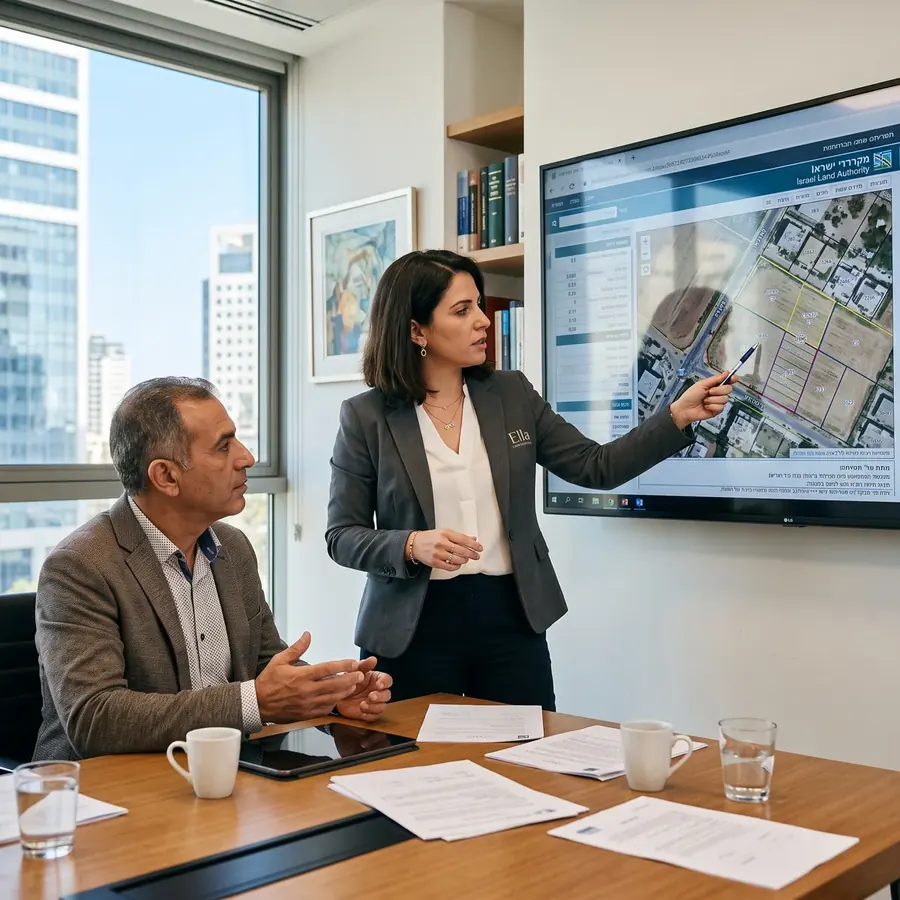
This is the core of our due diligence. We meticulously review all relevant Tochnit documents – national, district, local, and detailed plans – that pertain to your property. This includes a careful reading of the full text of these plans, examining accompanying maps, and understanding all regulatory provisions. We analyze specific details such as:
- Building rights: Permitted construction area, number of floors, and overall volume.
- Permitted uses: Whether the property can be used for residential, commercial, industrial, or mixed purposes.
- Height restrictions and setback requirements: Crucial for understanding development potential and limitations.
- Parking regulations: The number of parking spaces required per unit or per square meter.
- Public space designations: Identifying any parts of the property designated for public use, such as roads, parks, or schools.
- Easements and caveats: Any rights of way, utility easements, or other encumbrances registered against the property that could affect its use or value.
We also examine past and pending applications to **Vaada** committees related to the property, gaining insight into previous planning decisions and any ongoing processes.
Phase 3: Engagement with Planning Authorities
Our team engages directly with the relevant planning authorities, including local and district planning committees. This involves reviewing official minutes of Vaada meetings, identifying any active objections or appeals concerning the property or its surrounding area, and consulting with relevant municipal departments such as engineering, infrastructure, and environmental protection. For instance, understanding the specific requirements of the Tel Aviv (61000) municipality or the Jerusalem (91999) planning department is critical to anticipating bureaucratic hurdles and ensuring a smooth process.
Phase 4: Comprehensive Legal Opinion and Recommendations
Upon completion of our thorough investigation, we provide you with a clear, detailed legal opinion. This comprehensive report outlines all findings, highlights potential risks, identifies untapped opportunities, and offers recommended courses of action. We provide strategic advice on how to proceed with the transaction, including key negotiation points, to ensure your interests are fully protected and your investment strategy is sound.
Ella
Contact Our Israeli Real Estate Law Experts Today
★★★★★ 4,9/5 · 127 client reviewsNavigating Complexities: Specific Scenarios Requiring Expert Due Diligence
The need for specialized urban planning due diligence is amplified in various real estate scenarios, each presenting its own unique set of challenges and opportunities within the Israeli legal framework.
Purchasing Land for Development
When acquiring raw land for development, due diligence focuses heavily on verifying the accuracy of declared development rights, assessing infrastructure availability (water, electricity, sewage, roads), and scrutinizing the potential for future changes to the relevant Tochnit. Understanding the specific process for obtaining building permits from the Vaada, including any preconditions or levies, is paramount to a successful project. This proactive approach ensures that the land's development potential aligns with your vision and financial projections.
Acquiring Existing Properties
For existing properties, due diligence involves a rigorous check for any existing planning violations, unapproved additions, or discrepancies between the property's physical state and its legal documentation. We assess the potential for future renovation or expansion based on current Tochnit, ensuring that your plans are feasible and compliant. Furthermore, we investigate the property's status regarding urban renewal projects like TAMA 38 or Pinui Binui, which can significantly impact its value and future development trajectory.
Participating in Urban Renewal Projects (e.g., Pinui Binui, TAMA 38)
Urban renewal projects are highly complex and demand an exceptionally detailed level of due diligence. This includes an in‑depth review of the specific project's Tochnit, the developer agreements, and all necessary Vaada approvals. Understanding the intricate legal and financial implications for individual property owners within such projects, including their rights, obligations, and potential benefits, is crucial. Our expertise ensures you enter these ventures fully informed and protected.
Resolving Planning Disputes
Should a planning dispute arise, our firm provides robust legal representation. This includes handling objections to proposed planning schemes, appealing adverse decisions made by a Vaada, and navigating the often‑complex administrative and judicial review processes. Whether the dispute involves building rights, land designations, or neighborly disagreements, our goal is to achieve a favorable resolution while safeguarding your property interests.
Essential Documents for Urban Planning Review
- Tabu (Land Registry) Extract: The official document detailing ownership, liens, and other registered rights.
- Relevant Tochnit Documents and Maps: All applicable national, district, local, and detailed planning schemes.
- Building Permits and Occupancy Certificates (Tofes 4): Proof of legal construction and habitability.
- Local Authority Property Tax Assessments (Arnona): Indicates the property’s official classification and size.
- Architectural Plans (As‑Built and Approved): Comparison between what was approved and what was built.
- Vaada Decisions: Minutes and rulings from planning committees relevant to the property.
- Survey Plans: Precise measurements and boundaries of the property.
Contact Our Israeli Real Estate Law Experts Today
★★★★★ 4,9/5 · 127 client reviewsThe Value of Local Expertise in Israeli Real Estate Law
While the principles of due diligence are universal, their application in the Israeli context requires specialized local knowledge. Our firm's deep understanding of Israeli real estate law, coupled with practical experience, provides an invaluable advantage.
Understanding Nuances of Israeli Legislation
The Israeli legal system, particularly its land law, has unique historical, religious, and cultural underpinnings that differ significantly from other jurisdictions. Expertise in Hebrew legal terminology, specific statutes, and case precedents is crucial for accurate interpretation and effective legal strategy. Our team possesses this nuanced understanding, ensuring no critical detail is overlooked.
Navigating Bureaucracy and Local Practices
The Israeli planning and building authorities can be complex and, at times, challenging to navigate. An experienced local lawyer understands not only the written regulations but also the unwritten rules, internal protocols, and effective communication channels within these bureaucratic structures. For example, interacting with the Haifa (31000) municipality or the Be'er Sheva (84100) planning department requires specific knowledge of their local procedures and key personnel. This local insight can significantly expedite processes and prevent unnecessary delays.
Proactive Problem Solving
Our deep local expertise allows us to anticipate potential issues before they arise. By understanding common pitfalls and regulatory trends, we can develop proactive strategies and solutions to overcome planning hurdles. This forward‑thinking approach minimizes risks and maximizes efficiency throughout your real estate transaction, whether you are dealing with a property in Eilat (88000) or a development in Modi'in‑Maccabim‑Re'ut (71700).
Ella
| Aspect | With Expert Due Diligence | Without Expert Due Diligence |
|---|---|---|
| Risk Assessment | Comprehensive identification and mitigation of all planning, legal, and financial risks. | High exposure to unforeseen liabilities, planning violations, and financial losses. |
| Legal Compliance | Ensured adherence to all current and future planning schemes (Tochnit) and Vaada decisions. | Potential for non‑compliance, legal disputes, and enforcement actions by authorities. |
| Investment Security | Strong foundation for investment, clear understanding of property value and potential. | Uncertainty regarding property's true value, potential for devaluation due to hidden issues. |
| Timeline | Streamlined process with anticipated hurdles addressed proactively, reducing delays. | Likelihood of significant delays due to unexpected bureaucratic obstacles or legal challenges. | Cost Implications | Transparent fees for expert services, preventing costly future penalties or project rework. | Potential for substantial unexpected costs from fines, demolition, or protracted legal battles. |
Contact Our Israeli Real Estate Law Experts Today
★★★★★ 4,9/5 · 127 client reviewsKey Considerations for International Investors and Olim
For international investors and new immigrants (Olim) engaging with the Israeli real estate market, the complexities of urban planning can be particularly daunting. Our firm is uniquely positioned to bridge these gaps and provide clarity.
Bridging Cultural and Legal Gaps
We understand that legal frameworks and business practices can vary significantly across different countries. Our role is to translate the intricacies of the Israeli planning system, including the functions of the Tochnit and Vaada, into an accessible and understandable format. We address concerns specific to non‑resident investors and new immigrants, ensuring they are fully equipped to make informed decisions.
Ensuring Transparency and Clarity
Transparency is paramount. We provide clear, concise explanations of complex legal concepts and planning documents, ensuring you understand every aspect of your transaction. Where necessary, we facilitate the translation of official documents and processes, ensuring complete comprehension and peace of mind for our international clientele.
Top 5 Critical Elements of Urban Planning Due Diligence
- Verification of all relevant Tochnit documents and their precise implications for the property's current and future use.
- Thorough review of building permits and meticulous confirmation of compliance for all existing structures on the property.
- Identification of any pending or approved changes by the relevant Vaada committees that could impact the property.
- Comprehensive assessment of development rights, including potential for future expansion or eligibility for urban renewal projects.
- Uncovering any planning violations, liens, encumbrances, or third‑party claims that could affect ownership or development.
The landscape of Israeli real estate, while full of promise, demands a sophisticated understanding of its urban planning intricacies. Comprehensive urban planning due diligence (Tochnit / Vaada) is the cornerstone of any secure and successful property venture in Israel. Our dedicated team provides the in‑depth legal analysis and strategic guidance you need to navigate these complexities with confidence. We ensure that every aspect of your potential investment is meticulously examined, protecting your interests and empowering you with complete clarity. Don't leave your significant real estate investment to chance. Partner with a trusted legal advisor who understands the nuances of Israeli planning law.
Ella
Contact us today for a confidential consultation to discuss your specific needs and secure your real estate future in Israel.