



Introduction: Navigating the Complexities of Land Consolidation and Subdivision in Israel
The Israeli real estate market, while dynamic and full of opportunity, presents unique legal and administrative challenges, particularly concerning land ownership and development. For international investors, members of the Israeli diaspora, and new immigrants (olim) seeking to engage with property in Israel, understanding the intricacies of "Land Consolidation and Subdivision" is paramount. These processes, often referred to as re‑parcellation and partition, are fundamental to urban planning, infrastructure development, and optimizing property value. Without expert legal guidance, navigating the dense regulatory landscape and bureaucratic procedures can be daunting, risking significant delays, financial losses, or missed opportunities.
At our firm, we specialize in providing clear, professional, and reliable legal counsel tailored to the specific needs of a global English‑speaking clientele. We leverage our deep understanding of Israeli land law to transform complex legal challenges into actionable solutions, ensuring your real estate ventures are not only compliant but also strategically advantageous. This comprehensive guide will demystify land consolidation and subdivision, offering an invaluable resource for anyone looking to invest, develop, or manage property in Israel effectively.
Let Us Guide Your Land Consolidation Process
★★★★★ 4,9/5 · 127 client reviewsUnderstanding Land Consolidation (Re‑Parcellation) in Israel
Land consolidation, or re‑parcellation, is a critical tool in Israeli urban planning and development. It involves the unification of multiple existing land plots, often fragmented or irregularly shaped, into a single, larger parcel. This unified parcel is then re‑divided into new, more efficiently designed plots, with allocations for public infrastructure such as roads, parks, and schools. This process is typically initiated by local planning authorities to facilitate large‑scale development projects, improve public services, and enhance the overall urban fabric.
What is Land Consolidation?
Legally defined under the Planning and Building Law, 2026, land consolidation aims to reorganize land ownership boundaries within a designated area. The primary goal is to create a rational and economically viable land structure that supports modern urban development. It allows for the construction of new neighborhoods, commercial centers, and essential public facilities that would be impossible on fragmented, privately owned plots. Property owners whose land is included in a consolidation scheme receive new plots, often of equivalent value but in a different location or configuration, within the re‑parcellated area. The process ensures that each owner retains their proportionate share of the land's overall value, even if their specific plot changes.
The Consolidation Process: Key Stages
The land consolidation process in Israel is multi‑faceted and involves several distinct stages, each requiring meticulous legal oversight:
- Initiation and Planning: The local planning committee or a developer proposes a consolidation scheme. This typically involves extensive urban planning, environmental impact assessments, and preliminary legal reviews.
- Scheme Approval: The proposed scheme undergoes a rigorous review by the District Planning and Building Committee, and often the National Planning and Building Council. Public objections are heard and addressed during this phase.
- Valuation and Allocation: Independent appraisers assess the value of the original plots and determine the proportionate value of the new plots to be allocated. This stage is crucial for ensuring fairness and equity among property owners.
- Implementation and Registration: Once approved, the new plots are demarcated, infrastructure is developed, and the updated ownership details are registered with the Land Registry Office. This final step legally formalizes the new land structure.
Throughout these stages, the involvement of an experienced real estate lawyer is indispensable. We ensure that your rights are protected, valuations are fair, and the allocation of new plots aligns with your interests and the legal framework.
Benefits and Challenges for Property Owners
Land consolidation can offer significant benefits, such as increased property value due to improved infrastructure and urban planning, access to new development opportunities, and enhanced living environments. For example, a fragmented plot in Tel Aviv (60000) might become part of a larger, well‑planned development, significantly boosting its potential. However, it also presents challenges, including potential delays, the loss of a specific plot's sentimental value, and disputes over valuations or new plot allocations. Understanding these aspects is crucial for making informed decisions.
Let Us Guide Your Land Consolidation Process
★★★★★ 4,9/5 · 127 client reviewsNavigating Land Subdivision (Partition) in Israeli Real Estate
While consolidation involves merging and re‑dividing land for public benefit, subdivision (or partition) focuses on dividing an existing land parcel into two or more smaller, independent plots. This process is typically initiated by individual property owners or developers for various private purposes, such as selling portions of a larger estate, developing multiple residential units, or resolving co‑ownership disputes.
Defining Land Subdivision
Land subdivision involves the legal and physical division of a registered land parcel (often referred to as a "Gush" and "Helka" in Israel) into smaller, separate plots, each with its own distinct registration in the Land Registry. The objective is to create new, legally recognized parcels that can be independently owned, developed, or transacted. For instance, a large plot in Jerusalem (91000) suitable for a single family home might be subdivided to allow for two or three smaller homes, increasing its overall economic utility.
Legal Requirements and Permitting
The subdivision process in Israel is subject to stringent legal requirements and necessitates various permits and approvals from relevant authorities:
- Compliance with Planning Schemes: Any proposed subdivision must align with the existing outline plans (Taba) and zoning regulations applicable to the land.
- Local Authority Approvals: The local planning committee must approve the subdivision plan, ensuring it meets urban planning standards, infrastructure requirements, and public interest considerations.
- Survey and Demarcation: A licensed surveyor must prepare a detailed subdivision plan (Toranit) that accurately delineates the new plot boundaries.
- Land Registry Registration: Once all approvals are obtained, the new plots are registered with the Land Registry Office (Tabu), formally establishing their independent legal status.
Failure to comply with any of these requirements can lead to significant delays or even rejection of the subdivision application. Our firm provides comprehensive support, ensuring all legal and administrative hurdles are successfully cleared.
Types of Subdivision
Subdivision can range from relatively straightforward divisions of undeveloped land to complex projects involving existing structures or the need for new infrastructure:
- Simple Subdivision: Involves dividing an undeveloped plot into smaller, buildable parcels without significant changes to existing infrastructure.
- Complex Subdivision: Often applies to developed plots or requires the creation of new access roads, utility lines, or other public facilities to serve the newly created parcels. This type of subdivision is typically more time‑consuming and involves greater coordination with municipal authorities.
Regardless of the complexity, our team is equipped to handle all aspects of the subdivision process, from initial planning to final registration, ensuring a smooth and efficient outcome for our clients. Ella often assists clients with these complex projects by providing essential technical surveys.
Let Us Guide Your Land Consolidation Process
★★★★★ 4,9/5 · 127 client reviewsThe Legal Framework and Regulatory Landscape in Israel
Understanding the legal and regulatory environment is fundamental to successfully navigating land consolidation and subdivision in Israel. The framework is multifaceted, involving several key laws and government agencies.
Key Legislation Governing Land Processes
The primary legislative instruments that govern land consolidation and subdivision include:
- The Planning and Building Law, 2026: This is the cornerstone of Israeli planning law, establishing the framework for all land use, development, and construction. It defines the powers of planning committees, the process for approving plans, and the procedures for consolidation and subdivision.
- The Land Law, 2026: This law governs property rights, ownership, and transactions in Israel, including the registration of land and the creation of various interests in land.
- The Land Registration Ordinance, 2026: This ordinance details the procedures for registering land transactions, including the registration of new plots resulting from subdivision or consolidation.
For foreign investors, specific regulations may also apply, particularly concerning the acquisition of land and the repatriation of funds. Our expertise ensures compliance with all relevant laws, protecting your investment.
Role of Government Agencies
Several key government agencies play pivotal roles in land consolidation and subdivision:
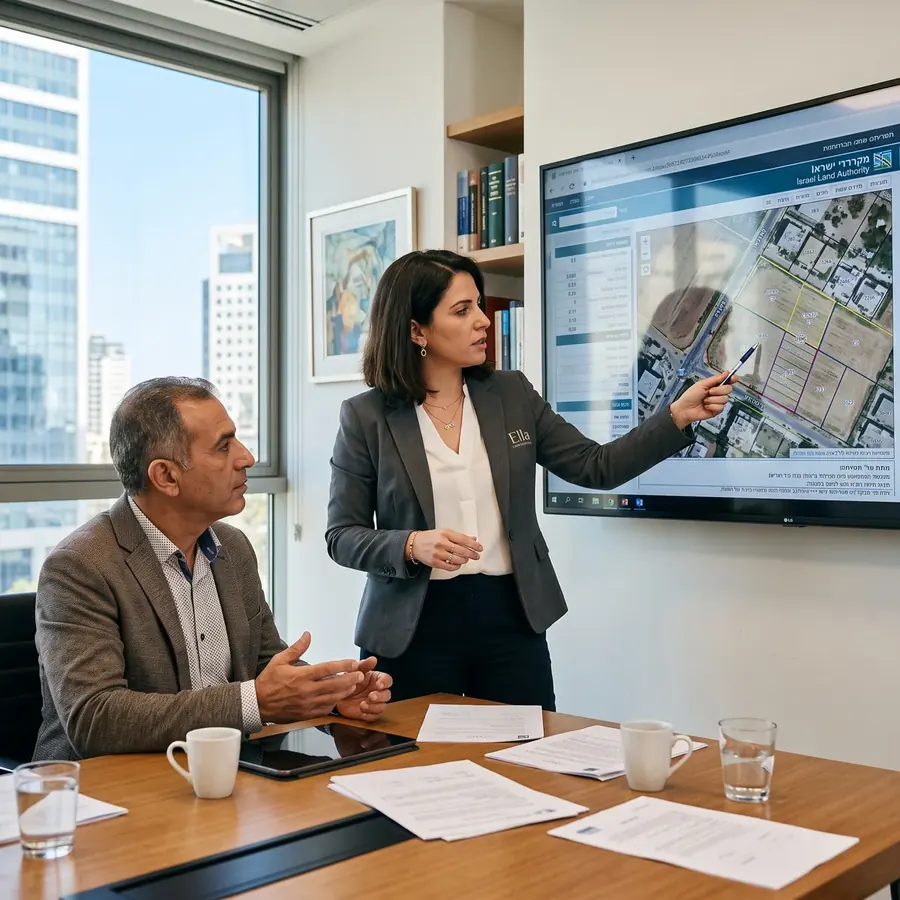
- The Israel Land Authority (ILA): Manages and administers state‑owned land, which constitutes a significant portion of Israel's territory. Many consolidation schemes involve ILA‑managed land.
- Local Planning and Building Commissions: These municipal bodies are responsible for approving local outline plans (Taba), building permits, and subdivision/consolidation schemes within their jurisdiction. For example, the commission in Haifa (31000) would oversee projects in that area.
- District Planning and Building Commissions: Oversee the local commissions and approve larger‑scale plans and appeals.
- The Land Registry Office (Tabu): Responsible for maintaining the official records of land ownership and rights. All changes resulting from consolidation or subdivision must be meticulously registered here.
Our firm acts as your advocate, liaising with these agencies to expedite processes and resolve any bureaucratic complexities.
Zoning and Master Plans
Zoning regulations and master plans (such as the National Outline Plan, TAMA 35, and local Taba plans) significantly impact the feasibility and scope of land consolidation and subdivision. These plans dictate permissible land uses, building heights, density, and infrastructure requirements for specific areas. A proposed subdivision in Netanya (42000), for instance, must strictly adhere to the local Taba plan, which might specify minimum plot sizes or building setbacks. Our lawyers conduct thorough due diligence to ensure your proposed project aligns with all applicable planning schemes, minimizing the risk of rejection or costly amendments.
Let Us Guide Your Land Consolidation Process
★★★★★ 4,9/5 · 127 client reviewsStrategic Considerations for International Investors and Olim
For international clients, the Israeli real estate market offers unique opportunities, but also requires a strategic approach to land consolidation and subdivision. Understanding key considerations beyond the legal framework is essential for successful investment.
Due Diligence in Land Transactions
Thorough due diligence is paramount. Before engaging in any land consolidation or subdivision project, it is crucial to:
- Verify Land Ownership and Rights: Confirming the registered ownership, checking for any encumbrances (e.g., mortgages, liens, easements), and understanding all associated rights is fundamental.
- Assess Planning Status: A comprehensive review of the applicable master plans, zoning regulations, and building permits is necessary to determine the development potential and limitations of the land.
- Evaluate Infrastructure Availability: Confirming access to essential infrastructure such as water, electricity, sewage, and roads is vital, especially for newly subdivided plots.
- Review Environmental and Geotechnical Reports: Understanding the environmental conditions and soil stability of the land can prevent future complications and costs.
Our firm conducts exhaustive due diligence, providing you with a clear and comprehensive picture of the land's status and potential, allowing you to make informed investment decisions.
Tax Implications of Consolidation and Subdivision
Land consolidation and subdivision can have significant tax implications in Israel. Key taxes to consider include:
- Land Betterment Tax (Mas Shevach): This tax is levied on the profit generated from the sale of real estate, including profits realized through land consolidation or subdivision that increases the land's value.
- Purchase Tax (Mas Rekhisha): While typically associated with the acquisition of property, certain aspects of consolidation and subdivision, especially if they involve the exchange of plots, might trigger purchase tax obligations.
- Value Added Tax (VAT): For developers or businesses involved in land transactions, VAT implications can arise, particularly concerning services rendered or the sale of newly developed properties.
Navigating these tax complexities requires specialized knowledge. We work closely with tax experts to provide comprehensive advice, ensuring you comply with all tax obligations while optimizing your financial outcomes. Ella can offer specialized tax advice in these situations.
Protecting Your Interests: The Role of a Real Estate Lawyer
From the initial assessment of a property's potential for consolidation or subdivision to the final registration of new plots, a real estate lawyer is your indispensable partner. We provide:
- Strategic Planning and Advice: Guiding you through the strategic implications of each process, aligning legal actions with your investment goals.
- Representation Before Authorities: Acting on your behalf before planning committees, the Israel Land Authority, and the Land Registry Office.
- Drafting and Reviewing Legal Documents: Ensuring all contracts, agreements, and applications are legally sound and protect your interests.
- Dispute Resolution: Representing you in any disputes that may arise, whether with co‑owners, neighbors, or planning authorities.
Our proactive and client‑focused approach ensures that your interests are paramount throughout the entire process.
Let Us Guide Your Land Consolidation Process
★★★★★ 4,9/5 · 127 client reviewsComparative Analysis: Consolidation vs. Subdivision
While both land consolidation and subdivision involve altering property boundaries, their purposes, processes, and implications differ significantly. Understanding these distinctions is crucial for property owners and investors in Israel.
Table 1: Key Differences
| Feature | Land Consolidation (Re‑Parcellation) | Land Subdivision (Partition) |
|---|---|---|
| Primary Purpose | Urban planning, public infrastructure, large‑scale development. | Creating independent plots for individual sale, development, or inheritance. |
| Initiator | Typically initiated by planning authorities or large developers. | Typically initiated by individual property owners or developers. |
| Scope | Affects multiple land parcels within a designated planning area. | Affects a single land parcel, dividing it into smaller units. |
| Outcome | New, often reconfigured plots for original owners, with land allocated for public use. | Multiple new, distinct plots from a single original parcel. |
| Legal Complexity | High; involves extensive planning, public hearings, and multiple stakeholders. | Moderate to high; requires adherence to zoning and planning regulations. |
| Common Scenarios | New neighborhood construction, major road projects, urban renewal. | Selling off part of a large plot, building multiple homes on one parcel, resolving co‑ownership. |
Table 2: Advantages and Disadvantages for Property Owners
| Aspect | Advantages of Consolidation | Disadvantages of Consolidation | Advantages of Subdivision | Disadvantages of Subdivision |
|---|---|---|---|---|
| Property Value | Potential for significant increase due to improved infrastructure and planning. | Uncertainty regarding new plot location and precise value. | Increases marketability and potential for higher overall sale price. | May reduce individual plot size, potentially limiting future development options. |
| Control | Limited individual control over the process and final plot allocation. | Loss of specific original plot, potential for lengthy delays. | Greater control over the division and use of the new plots. | Requires significant upfront investment in surveys, permits, and infrastructure. |
| Development | Access to large‑scale, well‑planned development opportunities. | Development timelines are often dictated by the broader scheme. | Enables tailored development on smaller, more manageable parcels. | Must adhere strictly to local zoning and building codes for each new plot. |
| Bureaucracy | Involves complex interactions with multiple government agencies. | High potential for bureaucratic delays and administrative hurdles. | Still requires permits, but generally less complex than consolidation. | Risk of rejection if plans do not meet strict regulatory criteria. |
Let Us Guide Your Land Consolidation Process
★★★★★ 4,9/5 · 127 client reviewsCommon Pitfalls and How to Avoid Them
Both land consolidation and subdivision, while offering substantial benefits, are fraught with potential pitfalls that can derail even the most carefully planned projects. Being aware of these challenges and having a proactive legal strategy is key to success.
Lack of Comprehensive Planning
One of the most common errors is proceeding without a thorough understanding of all applicable planning laws, zoning restrictions, and the long‑term implications of the project. This can lead to delays, costly redesigns, or even outright rejection of a scheme. For instance, attempting a subdivision in a conservation zone near Caesarea (38000) without proper environmental assessments would be a critical planning oversight.
Unforeseen Regulatory Hurdles
The Israeli regulatory environment is dynamic and can be complex. Changes in planning policies, new interpretations of existing laws, or unexpected requirements from local authorities can suddenly emerge. Without expert legal representation to anticipate and navigate these hurdles, projects can become stalled indefinitely.
Disputes Among Co‑Owners
When land is jointly owned, especially in inheritance cases, disagreements among co‑owners regarding the terms of consolidation or subdivision can quickly escalate into costly legal battles. Clear agreements, mediated discussions, and legally binding resolutions are essential to prevent such disputes.
Inadequate Legal Representation
Attempting to manage these complex processes without specialized legal counsel is perhaps the riskiest pitfall. An attorney lacking specific expertise in Israeli real estate and planning law may overlook critical details, miss deadlines, or fail to effectively advocate for your interests before the relevant authorities. Our firm provides the specialized representation needed to avoid these common mistakes.
Let Us Guide Your Land Consolidation Process
★★★★★ 4,9/5 · 127 client reviewsOur Integrated Approach to Land Consolidation and Subdivision in Israel
At our firm, we pride ourselves on offering an integrated, client‑centric approach to land consolidation and subdivision in Israel. Our expertise is not just in understanding the law, but in applying it strategically to achieve the best possible outcomes for our international clients.
Expert Legal Counsel Tailored to Your Needs
We understand that each client and each property is unique. Our legal counsel is not one‑size‑fits‑all; instead, we take the time to deeply understand your specific goals, investment strategy, and the particularities of your land. Whether you are an Israeli expatriate looking to develop ancestral land or a foreign investor eyeing a new opportunity in Herzliya (46100), our advice is always personalized and pragmatic. We guide you through every step, from initial feasibility studies to the final registration of your redesigned property.
Streamlining Complex Bureaucracy
The Israeli bureaucracy can be challenging, even for seasoned local professionals. For those unfamiliar with the system, it can be an insurmountable barrier. We act as your trusted intermediary, navigating the labyrinth of government agencies, planning committees, and the Land Registry Office on your behalf. Our established relationships and in‑depth knowledge of administrative procedures allow us to streamline processes, minimize delays, and effectively resolve any bureaucratic obstacles that may arise. This proactive approach saves you valuable time and resources.
Maximizing Your Property’s Potential
Our ultimate goal is to help you unlock and maximize the full potential of your real estate assets in Israel. Through strategic land consolidation, we can help transform fragmented plots into valuable development opportunities. With precise subdivision, we enable you to optimize the use of your land, whether for multiple sales, diversified development, or family inheritance planning. We look beyond the immediate transaction, considering the long‑term value and strategic implications of every decision. This holistic perspective ensures that your real estate ventures are not just legally compliant but also financially astute. Ella can assist in the valuation aspects to ensure maximum potential is realized.
Client Success Stories
Our track record speaks for itself. We have successfully advised numerous international clients through complex land consolidation and subdivision projects across Israel. From facilitating the re‑parcellation of agricultural land for residential development in the Galilee to subdividing urban plots for luxury apartments in Tel Aviv, our expertise has consistently delivered favorable outcomes. While we respect client confidentiality, the consistent feedback highlights our clear communication, diligent advocacy, and unwavering commitment to client success. We are dedicated to providing the same level of exceptional service to you.
Let Us Guide Your Land Consolidation Process
★★★★★ 4,9/5 · 127 client reviewsTop 5 Considerations Before Initiating Land Consolidation or Subdivision
- Thorough Legal Due Diligence: Always start with a comprehensive legal review of the land's status, ownership, and any existing encumbrances.
- Alignment with Planning Schemes: Ensure your project is fully compliant with all national, district, and local master plans and zoning regulations.
- Financial Viability Assessment: Conduct a detailed financial analysis, including potential costs (professional fees, taxes, infrastructure) and projected returns.
- Stakeholder Communication: If multiple owners are involved, establish clear communication channels and formal agreements to prevent disputes.
- Expert Legal Representation: Engage a specialized real estate lawyer with proven experience in Israeli land consolidation and subdivision from the outset.
Let Us Guide Your Land Consolidation Process
★★★★★ 4,9/5 · 127 client reviewsConclusion: Your Trusted Partner in Israeli Real Estate
Navigating the intricate landscape of land consolidation and subdivision in Israel demands not only a deep understanding of the law but also practical expertise and a client‑focused approach. For international investors, members of the diaspora, and olim, the complexities can be amplified without the right legal support. Our firm is dedicated to being that indispensable partner, offering transparent fees and reliable guidance every step of the way.
We empower you to make informed decisions, mitigate risks, and successfully realize your real estate aspirations in Israel. From the initial consultation to the final registration, we are committed to protecting your interests and maximizing the value of your property. Don't let the complexities of Israeli land law deter your ambitions.
Contact us today to discuss your land consolidation or subdivision project in Israel. Let our expertise pave the way for your success.