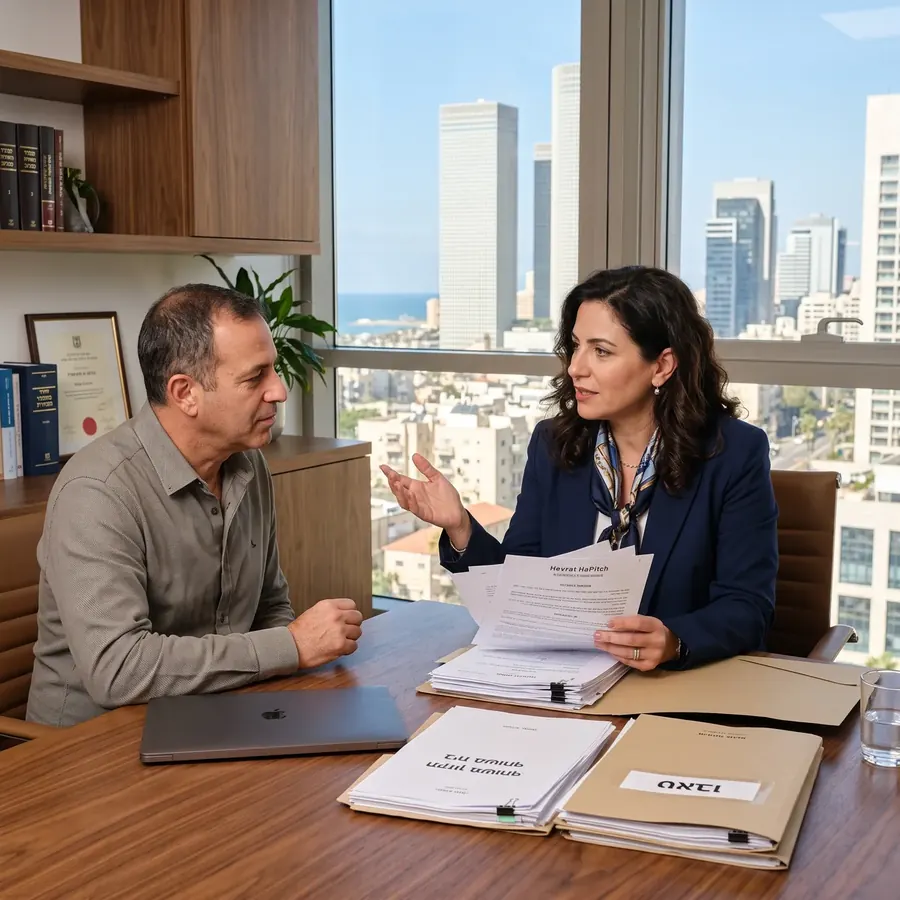





Investing in real estate in Israel presents unique opportunities, especially when considering joint ownership or partnership structures. Whether you are an Israeli real estate buyer in the diaspora, a foreign investor seeking robust opportunities, or an Oleh Hadash establishing roots, understanding the intricacies of these arrangements is paramount. At Ella, we specialize in providing comprehensive legal guidance for complex property transactions, ensuring your investments are secure, compliant, and strategically sound. Our firm offers unparalleled expertise in Israeli real estate law, dedicated to protecting your interests and maximizing your investment potential. We understand that purchasing property, particularly under joint ownership or partnership, involves significant legal and financial considerations, and our mission is to navigate these complexities on your behalf with clarity and professionalism. We pride ourselves on delivering tailored solutions and transparent advice, making your real estate journey in Israel as seamless and secure as possible.
Understanding Joint Ownership in Israeli Real Estate
Joint ownership, often referred to as co‑ownership, is a common arrangement in Israeli real estate, particularly for families, couples, or friends investing together. This structure allows multiple individuals to hold rights in the same property, but it comes with distinct legal implications that require careful consideration. In Israel, the primary forms of joint ownership are Tenancy in Common (Ba'alut Meshutefet) and Joint Tenancy (less common but with specific applications). Each form dictates how ownership is held, how profits and expenses are distributed, and what happens to the property upon the death of one of the owners.
Tenancy in Common (Ba'alut Meshutefet)
Under Tenancy in Common, each owner holds a distinct, undivided share of the property. This means that while they share possession of the entire property, their ownership percentages can vary. For instance, one owner might hold 60% and another 40%. A key characteristic of Tenancy in Common is that there is no right of survivorship. Upon the death of a co‑owner, their share does not automatically pass to the surviving co‑owners but instead becomes part of their estate, to be distributed according to their will or the laws of inheritance. This offers greater flexibility in estate planning but can also introduce complexities if not properly addressed in an initial agreement.
Key aspects of Tenancy in Common:
- Each owner possesses an undivided share.
- Shares can be unequal.
- No right of survivorship; shares pass to heirs.
- Each owner can sell or mortgage their share independently.
Joint Tenancy
While less prevalent than Tenancy in Common for general investment purposes, Joint Tenancy exists in specific contexts, particularly between spouses. The defining feature of Joint Tenancy is the right of survivorship. This means that upon the death of one joint tenant, their interest in the property automatically passes to the surviving joint tenant(s), bypassing the probate process. This provides a clear and often simpler transfer of ownership upon death, but it also limits an individual owner's ability to bequeath their share through a will. It requires four unities: unity of possession, interest, title, and time. For international investors, understanding these nuances is crucial, especially when their home country's legal definitions of joint ownership may differ significantly from Israeli law.
Key aspects of Joint Tenancy:
- Requires four unities (possession, interest, title, time).
- Right of survivorship applies.
- Shares are typically equal.
- Less flexibility in individual share disposition.
Our firm, Ella, assists clients in drafting comprehensive co‑ownership agreements that clearly define the rights and obligations of each party, mitigating potential disputes and ensuring a smooth ownership experience. Such agreements are vital for clarity and protection.
Consult Our Israeli Real Estate Legal Experts Today
★★★★★ 4,9/5 · 127 client reviewsPartnership Purchases: A Strategic Approach to Israeli Real Estate
Beyond traditional joint ownership, real estate partnerships offer a structured framework for multiple investors to pool resources and expertise for property acquisition and development in Israel. These can range from informal agreements to formal legal entities such as limited partnerships or companies, each with distinct advantages and regulatory requirements. Choosing the right partnership structure is a critical decision that impacts liability, taxation, management, and exit strategies.
Types of Real Estate Partnerships
1. General Partnership: In a general partnership, all partners share equally in the management and liability of the partnership. Each partner is personally liable for the partnership's debts and obligations, which can be a significant risk. This structure is often suitable for smaller, close‑knit groups of investors with a high degree of trust.
2. Limited Partnership (LP): A limited partnership involves at least one general partner and one or more limited partners. The general partner manages the business and bears unlimited personal liability, while limited partners contribute capital and have limited liability, typically up to the amount of their investment. Limited partners usually have no say in the day‑to‑day management of the partnership. This structure is popular for real estate projects where passive investors seek to limit their risk.
3. Limited Liability Company (LLC) or Company (Ltd.): While not strictly a "partnership" in the traditional sense, forming an LLC or a limited company in Israel is a common vehicle for real estate investments involving multiple parties. This structure provides limited liability to all shareholders, separating personal assets from company debts. It offers a more formal and robust framework for larger projects and can facilitate easier transfer of ownership interests. The process of establishing such an entity, particularly for foreign investors in cities like Tel Aviv (61000) or Jerusalem (91000), requires expert legal guidance to navigate Israeli corporate and real estate laws.
Comparative Table: Joint Ownership vs. Partnership Structures
| Feature | Tenancy in Common | Joint Tenancy | General Partnership | Limited Partnership (LP) | Limited Liability Company (LLC/Ltd.) |
|---|---|---|---|---|---|
| Liability | Individual, proportional to share | Individual, proportional to share | Unlimited for all partners | Unlimited for general, limited for limited partners | Limited for all shareholders |
| Management | Shared, often by agreement | Shared, often by agreement | Shared by all partners | General partner manages | Managed by directors/officers |
| Ownership Transfer | Individual share transferable to heirs/third parties | Right of survivorship (to co‑owners) | Requires partner consent, complex | Limited partner shares more transferable than general | Shares easily transferable |
| Taxation | Individual income/capital gains | Individual income/capital gains | Pass‑through to partners | Pass‑through to partners | Corporate tax, then dividend tax |
| Formalities | Relatively simple | Relatively simple | Moderate to high | High, formal registration | High, corporate registration |
Consult Our Israeli Real Estate Legal Experts Today
★★★★★ 4,9/5 · 127 client reviewsNavigating the Legal Landscape of Israeli Real Estate
The Israeli legal framework for real estate is robust and can be complex, especially for international investors. Understanding key regulations, registration processes, and potential tax implications is crucial for any joint or partnership purchase. Our team at Ella provides comprehensive support through every stage of the process, from due diligence to contract negotiation and registration.
Due Diligence and Risk Mitigation
Before committing to any joint or partnership purchase, thorough due diligence is indispensable. This involves examining the property's legal status, zoning regulations, building permits, and any encumbrances such as mortgages or liens. For partnerships, it also extends to scrutinizing the financial standing and legal history of all prospective partners. Our firm conducts exhaustive due diligence, identifying and mitigating potential risks before they materialize. This is particularly important for properties in developing areas or those with complex ownership histories, ensuring transparency and security for all parties involved.
Drafting Comprehensive Agreements
The cornerstone of a successful joint ownership or partnership venture is a meticulously drafted agreement. This document should clearly outline:
- Ownership percentages and contributions: How much each party contributes and their corresponding share.
- Management and decision‑making: Processes for making key decisions, resolving disputes, and allocating responsibilities.
- Financial arrangements: How expenses (e.g., maintenance, taxes) and profits (e.g., rental income, sale proceeds) will be shared.
- Exit strategies: Provisions for selling a share, dissolving the partnership, or what happens in unforeseen circumstances like death or divorce.
- Dispute resolution mechanisms: Agreed‑upon methods for resolving disagreements to avoid costly litigation.
For example, in a joint purchase of an apartment in Haifa (31000) for rental income, a detailed agreement would specify not only the initial investment but also who manages the property, how rental income is distributed, and the process for selling the property in the future. Similarly, a partnership developing a commercial project in Netanya (42000) would require an agreement covering financing, construction timelines, marketing, and profit‑sharing models.
Consult Our Israeli Real Estate Legal Experts Today
★★★★★ 4,9/5 · 127 client reviewsTax Implications for Joint and Partnership Purchases in Israel
Understanding the tax landscape is vital for any real estate investment in Israel. Joint ownership and partnership structures have specific tax implications that can significantly affect returns. Key taxes include:
- Purchase Tax (Mas Rekhisha): Levied on the buyer, the rate varies based on the property type, value, and the buyer's residency status. For multiple owners, the tax calculation can become more intricate.
- Capital Gains Tax (Mas Revach MeKarka'in): Applied to the profit made from selling real estate. Exemptions and reduced rates may apply under certain conditions, which our experts can help you navigate.
- VAT (Ma'am): Applicable to certain types of real estate transactions, particularly new construction or commercial properties.
- Rental Income Tax: Income generated from renting out jointly owned or partnership properties is subject to tax, with various options for reporting and deductions.
The tax implications for foreign investors or Olim can differ from those for Israeli residents, making expert advice indispensable. We work to ensure that your investment structure is optimized for tax efficiency while remaining fully compliant with Israeli tax laws. Ella provides specialized tax planning for real estate investments.
Top Considerations for International Investors in Joint & Partnership Purchases:
- Residency Status: Your residency status (Oleh, foreign resident, returning resident) significantly impacts purchase tax rates and potential exemptions.
- Currency Exchange: Managing foreign currency exchange and transfer regulations to Israel.
- International Tax Treaties: Leveraging any double taxation treaties between your country of residence and Israel to avoid being taxed twice on the same income or capital gains.
- Power of Attorney: Establishing clear and legally sound powers of attorney if you cannot be physically present for all aspects of the transaction.
- Succession Planning: Ensuring your joint ownership or partnership agreement aligns with your international estate planning goals and Israeli inheritance laws.
Consider a scenario where two foreign investors from different countries (e.g., US and UK) decide to purchase a vacation property in Eilat (88000) under joint ownership. The tax implications for each investor would need to be assessed individually based on their respective national tax laws and any applicable treaties with Israel, in addition to Israeli property taxes. This highlights the critical need for specialized legal and tax advice.
Consult Our Israeli Real Estate Legal Experts Today
★★★★★ 4,9/5 · 127 client reviewsWhy Choose Ella for Your Joint or Partnership Real Estate Purchase in Israel?
Choosing the right legal partner is crucial when undertaking significant real estate investments, especially those involving joint ownership or partnership structures in a foreign jurisdiction. At Ella, we offer:
- Unmatched Expertise: Our team possesses deep knowledge of Israeli real estate law, with extensive experience in joint ownership, partnerships, and complex property transactions. We stay abreast of all legal developments and changes in legislation, ensuring our advice is always current and precise.
- Client‑Centric Approach: We prioritize your specific needs and investment goals, offering personalized legal strategies designed to achieve optimal outcomes. We take the time to understand your unique situation, providing clear explanations and guidance throughout the entire process.
- Proximity and Accessibility: While serving an international clientele, our presence in Israel ensures we are always close to the market, accessible for your needs, and capable of responding swiftly to any developments. We bridge the geographical gap, making investing in Israeli real estate straightforward for you, no matter where you are in the world.
- Transparent Communication: We believe in open and honest communication. You will be kept informed at every stage, with clear explanations of legal terms, processes, and potential implications. Our fee structures are transparent, ensuring you understand the value you receive without hidden costs.
- Comprehensive Support: From initial consultations and due diligence to contract drafting, negotiation, registration, and ongoing advisory, we provide end‑to‑end legal support, simplifying every aspect of your joint or partnership property purchase. Our goal is to ensure your investment is not only legally sound but also aligned with your long‑term financial objectives.
In 2026, the Israeli real estate market continues to evolve, presenting both opportunities and challenges. Whether you are considering purchasing a residential property in Beersheba (84000) with a family member or entering into a commercial partnership for a development project in Herzliya (46100), our firm is equipped to provide the expert legal guidance you need. We are committed to fostering successful and secure real estate investments for all our clients, protecting their interests with diligence and foresight. Our dedication to excellence and client satisfaction sets us apart as a trusted advisor in Israeli real estate law.
For further insights into related legal topics, please visit Ella.
Consult Our Israeli Real Estate Legal Experts Today
★★★★★ 4,9/5 · 127 client reviewsContact Us for Expert Guidance
Embarking on a joint ownership or partnership purchase in Israeli real estate requires meticulous planning and expert legal counsel. Do not navigate these complex waters alone. Our team is ready to provide the professional, reliable, and clear guidance you need to make informed decisions and secure your investment. Contact us today to discuss your specific needs and discover how our expertise can benefit you.